
Showing posts with label in the editor's chair. Show all posts

Saturday, 28 May 2011

In the Editor's Chair - Cynthia Lawrence-John

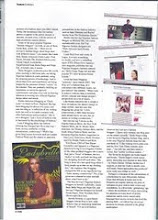
I do love conceptual magazines although they can be a little out there, they are very beautiful and inspirational. Enter Volt magazine which is a biannual publication that is a creative hybrid that shows off the work by from some of the directional fashion talent from all over the world. Volt covers British fashion, beauty and talent the work of photographers, stylists and artists. It was launched in 2007 in the midst of a very glamorous party in London and this was followed by a launch in Berlin a year later. Volt's online editor is Cynthia Lawrence-John who is a top stylist who was has worked with Sugababes, the Ting Tings, Kanye West, VV Brown, Lady Gaga and Rihanna. She took five minutes out of her busy schedule to tell me all about the publication.

How did you get into magazines?
I have worked in the magazine world since I was about 24, when I graduated with a photography degree from LCP (London College of Printing). My first job in a magazine publishing company was at Natmags/ Hearst publishing, as a Picture Editor which taught me a tremendous amount, much of which I still use today. I was also the Fashion Director of Sleaze magazine. Volt magazine was the original idea of Rui Faria, who is the editor-in-chief and also a beauty photographer. My initial job was fashion director but now I also work on the marketing side.

Describe the concept of Volt magazine and the idea behind the name.
Volt magazine is a biannual and is published as a Spring/Summer edition and an Autumn/Winter edition. The concept is for each image to stand up in its own right, as a beautiful image. It is unbound and over sized so that the magazine does not have the same format and constraints as traditional print magazines. Volt magazine aims to 'slow down' the viewing process...the large unbound format forces the viewer to actually 'LOOK' at the pages and content, as opposed to 'skim' the content. In each issue we like to commission well-established photographers and image-makers, as well as upcoming talent. We also like to feature well established brands alongside new design talent.

The design is very slick and very modern, how did you decide on the art design of the publication?
The art direction of Volt magazine has been a very organic process. Volt is not about following trends in design or a grid. Each story is designed with the concept of the story in mind, however the design does not take over from the story. In terms of the style of photography, it varies from issue to issue. I love photography, which has a cinematic feel and also documentary/reportage. Rui loves full on glamour fashion. I guess Volt is really a combination of the two. I love models that are ‘real’, with an inspiring personality. I love fashion and clothes, but it is important to me, particularly in my work that the models own ‘person’ comes across even if they are playing a character in a story.
Who is behind Volt magazine?
Volt is a surprisingly small team; Rui Faria came up with the original concept, he is a beauty photographer as well as running a photography agency called Areia. I am the fashion director, as well as working on the marketing and special projects alongside Rui. Jason Leung is the menswear fashion editor, Linda Ohstrom is our incredibly talented and wonderful beauty editor, Katie Baron is our features editor and on the design side is Angelo Pandelidis. Voltcafe, the online sister title to Volt magazine is very important, Anna Bang is the features editors on Voltcafe. We also have a team of amazing interns and students who are absolutely vital to the magazine.

Describe a day in the life of Cynthia Lawrence-John.
A day in my life is very varied! Which is why I love what I do. Aside from working as fashion director on Volt and Voltcafe, I am also a freelance stylist. One day I may be prepping for a fashion editorial, the next day researching photographers and new talent for upcoming issues of Volt or Voltcafe. The next day I may be doing a fitting for a music video or film, the next consulting for a brand, my days are never the same and I do not get bored, which is very important to me. I do not like to feel in a rut whether it be a creative rut or a career rut. I like to feel I am always learning something new.

Which blogs do you check out regularly?
To be honest, I must confess I don’t really check blogs on a regular basis. Maybe I should as there are some great ones. I do look at Lulu Kennedy’s blog and Sharmadean Reid as I find them both very inspiring and I like their take on life. I love The Sartorialist but when I do have time to read, I am more likely to pick up a book than to check blogs maybe I am just old fashioned?

What magazines do you read?
I love I-D, Fantastic Man, Twin, Another and Another Man, Teen Vogue, L’official and BUTT, although I do read others but I don’t want to go on.

What tips do you have for anyone who wants to become a magazine editor?
For anybody who wants to become an editor on a magazine I guess the main thing is to have a voracious appetite for all facets of the magazine world. I never studied fashion, my background is more in the theoretical side of image making and fashion, as opposed to the practical side of things. But I      enjoy both equally. I always want to keep learning and it is important to me to continue evolving. I learn as much from the young interns who come into magazine as they do from me. In any field always be open and ready to learn and take on board new ideas.

Issue 9 of Volt magazine is out now.

Check out the Volt website here.

You can follow Cynthia on Twitter.

Thursday, 16 December 2010

In the Editor's Chair - Abubukar Tafawa-Balewa

Remember back in the 90s in the midst of Cool Britannia when The Spice Girls, Oasis, Blur and Brit fashion designers ruled? Well heading the creastwave was a lads magazine called Loaded which set the trend for so-called lad culture which was really an excuse for men to drink loads of beer, smoke lots of cigarettes (or anything stronger) and behave like overgrown chimps. Loaded was created in 1994 by James Brown, Mick Bunnage and Tim Southwell and was so successful that it caused other male magazines such as FHM and Maxim to follow them. Well Loaded is still at large but nowhere near as high profile as it was and the debauchery that was now in men's magazines has now been replaced with a more stylish and quirky feel that is bordering on geek chic. Publications such as GQ and Esquire are aimed at a more culture orientated crowd and focus on fashion and music. A lot of international male magazines are going down this route as well. Take Mode Men magazine which is a publication aimed at Nigerian men, which focuses on style, gadgets and trends. The magazines was set up by Abubukar Tafawa-Balewa in 2006 when he saw a gap in the market.

How did you get into journalism?
I've always loved magazines after a short stint in legal practice, I decided there was a gap in the Nigerian men's magazine market. I knew loads of men like myself who had to buy GQ and Esquire monthly, I felt the Nigerian/Black man needed something of our own. It started off as a joke and we are about five years in the business.

Describe the concept of Mode men and the idea behind the name.
The concept has always been to have a magazine for stylish men who like the good things of life and who want to be up to date on trends and gadgets etc. The name has been something I had in my head from secondary school funny as it may sound... It was an acronym for 'men of distinctive elements'. It was amazing to see the 'Ugly Betty' series a year after we launched.

The design is very slick, how did you decide on the art design of the publication?
Each edition has a theme, that theme determines the cover. This particular issue is our 'men of the year issue', normally we have multiple covers but this year we decided to feature style mentor, Stan Mukoro alone as he had two nominations. Stan is style and class personified so we went with that in mind for the cover and the result was satisfactory.
Who is behind Mode Men?
Myself and my team. I'm the Editor-in-chief and double as a creative director. I have a wonderful, dedicate team supporting me.

How many members of staff work on the magazine?
We have a total number of ten but we are currently expanding as we go monthly, so we will be hiring a few more hands. We also work with a lot of freelance stylists, photographers, make up artists etc..

Describe a day in the life of Abukakar Tafawa-Balewa.
Two days are never the same for me. As a creative person I work at all and odd hours. Inspiration can come at 2.00am or 4.00am. I'm up early most days, pray, exercise (if I'm up to it). shower and head to the office. From there anything can happen: meetings, photo shoots, interviews, presentations, trips to London, Abuja... I don't have a closing time. I've spent many nights at the office also.

Which blogs do you check out regularly?
Bella Naija, Linda Ikeji and a few men's blogs.

What magazines do you read?
GQ, Esquire, Vibe and Vanity Fair. I also read Ebony and Essence.

What tips do you have for anyone who wants to become a magazine editor?
You need to love magazines, information and reading.

The Dec/Jan issue of Mode Men is out now.

You can check out the Mode Men website.

Thursday, 29 April 2010

In the Editor's Chair - Bec Brown

Finding out what you want to do when you are in your teens is a pretty big ask but sussing out your vocation at the age of five is pretty good going I say. That is what Bec Brown did when she put together her first every publication while most people were barely learning to write and read. I guess you could say that an editorial star was born. Fast forward 25 years and we have Bec as editor, publisher, art director and designer of Blanket Magazine which is a publication which covers art, design and photography. Based in Manchester, Bec also runs a successful freelance design business called sixheads. I caught up with her to find out about what life is like running your own magazine.

How did you get into journalism?
I am actually a designer more than a journalist. My background is photography and graphic design but I have always had a keen interest in writing as well. I guess that's why starting my own magazine was so appealing - I could combine all my interests in one neat package!

Describe the concept of Blanket magazine.
Blanket is an online PDF magazine that uncovers emerging and established artists, designers and photographers from all over the world. 

The design is very glam, how did you decide on the art design of the publication?
Thank you! Obviously because of my background in design and because I want to appeal to other visual creatives the design is always my top priority. I am a little bit of a perfectionist as well and I pay extra special attention to the small details that most people probably just flick over (but I know they are there!). For instance I always choose a different featured font for each issue, and I choose a specific colour palette for each issue. All of things are quite considered and I do spend a lot of time working on the design so that I can create a cohesive, beautiful and unique design each time.

Who is behind Blanket Magazine?
I originally started Blanket with a friend back in December 2006 but since 2007 I have been running it on my own.
How many members of staff work on the magazine? 
I have a regular team of around five to seven contributors who help with writing and design for each issue. We email back and forth and discuss ideas and then they send me their articles every two months. Blanket works more like a virtual office because my regular team of contributors are based all over the world - Australia, US and I am based in the UK. I communicate with them mainly via email or in the instance of my editorial assistant we talk via skype. We haven't actually ever met in person - so as you can see it's not very traditional! Although I have recently taken on a intern who comes into my studio once a week and it's been wonderful to have someone who I can talk with face to face! I do probably get less work done now! 

Describe a day in the life of Bec Brown. 
Everyday is different of course because I'm very hands on with the whole process of putting the magazine together from start to finish. I think the majority of my time is spent emailing. As Blanket is a bi-monthly publication I spend the first month emailing and gathering story ideas and interviews, then the next month I start collecting, editing and then designing the magazine. In between I do everything else - such as updating the website and social networking sites, emailing subscriptions, marketing, advertising, writing and designing. If I had to describe my favourite day then it would be when I am designing the magazine - this is when I am in my element and at my most happiest. 
Which blogs do you check out regularly?
A lot of art and design related blogs such as 

What magazines do you read? 
There are a pile on my desk right now which include:
Creative Review, Computer Arts, Monacle, Real Living, Living etc, Frankie and Dazed and Confused. 

What tips do you have for anyone who wants to become a magazine editor?
I guess I have learn't from experience that you have to go out and create opportunities for yourself. Before I started my own magazine I couldn't get a job in the magazine industry because they said I didn't have enough experience. Obviously I'm not saying that you have to go out and start your own magazine but you need to show that you want to be taken seriously. There are a lot of opportunities out there and if you really want it then you will find a way.

The April/May issue of Blanket Magazine is out now and you can read it here.

You can follow Blanket Magazine on Twitter.
 

Thursday, 25 March 2010

In the Editor's Chair - Sophia Jackson

There are loads of magazine out there which act as a guide to life in London; some are good but some are quite brilliant. Enter Lime magazine which acts as a guide to cultural London covering anything from music, theatre, comedy, radio and TV from a multi-cultural perspective. The editor is Sophia Jackson who is a bit of a media maverick; she has worked on a variety of publications such as Blink, New Nation, The BFM and also edits the Screen Nation Awards magazine. She is also the founder and editor of Afrizidiak Theatre News which covers African Caribbean theatre. I caught up with her to find out more about Lime and life in the fast lane as an editor. 

How did you get into journalism? 
Journalism is something that I’ve always wanted to do, however, I dragged my feet and found myself doing various admin related jobs until I panicked and realised that if I didn’t take my dreams seriously, no one would. I did work experience at The Journal whilst studying for my BA in Media Arts with English. At the time, Barbara Campbell was the editor and I then went on to write reviews for various publications. This gave me some experience in journalism but I needed something more concrete. So for two years, I did a part-time course studying for a Masters in Journalism Studies at the University of Westminster whilst working full-time.  My lecturer, Alan Hiscock, sent out an email about doing work experience for the black news website, Blink, and I decided to go for it. Working with Lester Holloway, who was the editor of Blink, was a life-changing experience. He was the first person to give me a paid journalism gig, and gave me many opportunities to develop as a journalist. He was like a mentor to me and meeting him was invaluable to my journalism experience and career. I then joined him at New Nation as their listings editor. Since doing my MA I have been the editor of the Screen Nation Awards magazine three times, another life-changing experience and again, I’m grateful to Screen Nation CEO/founder, Charles Thompson for believing in me. It was the first time I’d been editor of a magazine and although it was daunting and hard work, I loved it – probably because my creative flair is tinged with elements of being a bit of a bossy boots. I’ve also worked for BFM for a number of years on their bi-monthly magazine as the sub-editor and entertainments editor. I’ve been editor of their website for just over a year. Now I’m editor and founder of Afridiziak Theatre News, a website celebrating African-Caribbean theatre and editor of Lime magazine.
Describe the concept of Lime magazine.
‘Lime’ is a word used around the Caribbean which in a nutshell means ‘socialising with your friends, family and having fun’. We felt this was the perfect word to describe the magazine as it is a multi-cultural events listings guide. We’re all about good times, going out and socialising so we want our readers to ‘Come Lime with Us’ at the many cultural events, gigs, plays, gallery exhibitions, community events and film screenings that London has to offer. We also have some of the hottest interviews around - from A list stars to up and coming talent. We combine all of this with engaging features and all the latest reviews.


The design is very contemporary, how did you decide on the art design of the publication?
Thank you. We have been getting positive feedback and I think it’s because each issue gets better and better because we keep tweaking and working on the strengths from the previous issue. Also, our publisher, Got Media has a super creative eye for design. We also work with talented designers who are at the top of their game. As a team, we all want Lime to stand out from the crowd – so far, so good. I think the re-design of our front cover style has helped strengthen our brand, also. I’m torn between whether this cover or the Idris Elba (Feb 2010) is my favourite, so far. 

Who is behind the magazine and how many members of staff work on Lime?
Team Lime is me, the editor. Dean Serieux, head of sales, Michelle Adabra, our features editor, Audrey Brown, our features writer and Jerome DeFreitas, our designer. Dean, Michelle, Jerome and I are all former New Nation employees. With New Nation going into Administration in January 2009 it’s great that we’ve been able to turn that around. Lime also has a team of contributors on board too which is brilliant for us as we’re pleased that so many talented writers, like yourself, who want to get involved. 

Describe a day in the life of Sophia A Jackson. 
If I was ever followed around by a film crew for the day, you would wonder how I managed to cram so much into one day. My life is a series of deadlines being carefully juggled, managed and negotiated. I am ruled by my inbox and unless I stay on top of my emails things could get messy, neglected and pushed down the priority list. My BlackBerry is like a limb I wouldn’t want to live without – it’s a part of me. It’s probably slightly unhealthy but I just love the fact that I don’t have to do everything when I’m stuck at a laptop or PC. A typical day involves liaising with Team Lime – we often communicate with each other several times a day. I am in regular contact with people who work in entertainment PR, arranging for a journalist to review a gig, play or event or setting up interviews etc. Or I am busy writing reviews, doing interviews, editing copy, thinking of creative ways to keep the magazine fresh with unique themes, chasing images, forward planning, updating the ever-changing flat plan, and keeping the website up to date. I also have to keep my own website, Afridiziak Theatre News up to date so you can imagine my life is hectic. But I do feel blessed. I’m doing what I want to do, it’s not perfect but I’m happy and if you can be happy in your work then you’re in a good place I believe. I love meeting new people and going out with friends and family, and having new experiences. Which is why it’s hard to sometimes say no to press nights, launches, invites etc but you can’t do it all. Now I’m happy to encourage other writers to go out and about as I don’t feel I have to do it all anymore.

Which blogs do you check out regularly?
Tricia Wombell’s Black Book News, Angel Smith’s A Taste of Angel Cake and yours, of course.
 

What magazines do you read? 
I absolutely LOVE the free women’s weekly magazine, Stylist. I think it’s a publication that fills a gap, the editorial is on point, interesting and well targeted. I also buy Pride magazine religiously out of loyalty because it’s the only black women’s publication in the UK which has survived over the years and I like that.
 

What tips do you have for anyone who wants to become a magazine editor?
Be prepared to work hard and only work for a publication you are passionate about and believe in. Be conscious of the fact that you need to have serious time-management skills, love communicating with different kinds of people, all day every day, learn the art of networking and relish the thought of meeting new people. You’ll also need to become a professional at maintaining your contacts because without them well... Lastly, keep your friends and family close because you need them to keep you sane in this crazy media game and to remind you of what’s really important in life.

The March 2010 edition of Lime magazine is out now: The Goddess Issue is a salute to all women in celebration of International Women’s Month.


Check out Lime magazine's website here.  

You can can follow Lime on Twitter here.

Thursday, 25 February 2010

Fashioning February: In the Editor's Chair - Wafa Alobaidat

We are barely three months into the year yet bloggers have been talked about non stop since 2010 kicked in. From little Tavi's offending bow at New York Fashion Week to an avalanche of articles which have hyped up the bloggers and editors divide. This debate continued onto London Fashion Week when the unruly behaviour of a few blogger's were criticised. It looks like bloggers who have been warmly received by fashion brands might become the victims of a backlash. However every cloud has a silver lining and among these major faux pas have been a couple of exciting initiatives that surely will prove to be the saviour of bloggers. The Independent Fashion Bloggers Evolving Influence conference took place in New York last Monday and boasted several panels of respected bloggers who tackled issues such as ethics, professional blogging and marketing. The event was packed to capacity and the organisers had to create a space where people could watch the event on a screen. The event was also streamed online so bloggers all over the world could watch and this went down a treat. This takes me to Sketchbook Magazine which launched last August with a fashion blogger issue and as well as having Susie Bubble on the cover it featured interviews with other high profile fashion bloggers. Sketchbook is the baby of 23 year old Wafat Alobaidat who yearned to create a magazine which brimmed with illustrations, drawings and images that celebrated young talent. Wafat describes her magazine as part portfolio and character sketch and also rammed with fashion, art and culture. What is more remarkable about the publication is that it is one of few style magazines that is available by print on demand. I caught up with Wafat to find out the magazine, blogging and anything in between.

How did you get into journalism?
I started reading and writing at a very young age. I wrote short stories, kept journals, reported my daily life on a daily basis. I got some of my work published with a local newspaper and a local magazine a few years back, and a poem I wrote won a national contest in the US. I also started blogging when I was a student at Chelsea College of Art and Design and started to develop my writing there. I worked with many editors and writers after university and started to write for publications like Prim Magazine and Borderline in NY and Style Bazaar in London. Right now I still consider myself a journalist in a sense that through Sketchbook I assign stories to my writers, and keep the ‘reporting’ bit in check.  

Describe the concept of Sketchbook Magazine.
Sketchbook is a new quarterly magazine that showcases established and emerging creative talents in fashion, design and culture with a focus on features, photography and illustration. Featuring original sketchbook graphics, exclusive interviews with scientists in jelly and photographers in Africa, We present our finds in a raw and exposed fashion. In Sketchbook, it’s not just about the product itself, but also about the beauty of the process of conceptualization, creation and appreciating the means to an end. Sketchbook aims to provide an entrance into the minds of switched-on, aware and intelligent creative’s and inspire those who wish to be part of such an innovative industry. I wanted to create a publication rich with mood boards, illustrations, and bursting with ideas. I wanted it to be edit-free and advertise-less and full of workshops and spaces. 

The design is very glam, how did you decide on the art design of the publication?
The design for the first issue is very clean and straight forward which is still not how I envision Sketchbook. I want to do Sketchbook justice and really embrace the rawness, cuts, tears, look and feel of a sketch book. I am really looking to create an unconventional magazine free of guidelines, I want Sketchbook to explore different themes and styles in each issue, and try to get closer to what a sketch book really is, or try to explore the concept of a sketch book in each theme. 

Who is behind Sketchbook Magazine?
I started masterminding Sketchbook Magazine a year ago, so I was on my own for a while. I accumulated all the illustrators, designers, etc that I wanted to collaborate with. Features editor, Luma Bashmi joined six months later and she is my right hand person, overseeing the quality of all the features, does all the proof-reading and helps me run the whole Sketchbook brand (from Sketchbook TV, the magazine, the blog). Ekaete our content manager is our full time staffer and one of the core members of the magazine. 
How many members of staff work on the magazine? 
There are four full time staffers working with me and Luma at Sketchbook quarters, we have eight part- time interns who come in to write, report or blog for Sketchbook Magazine. 150 people have been involved with the first issue and 200 for the second issue. We also have a 15 member film crew made up of Komal Verma the executive producer of the webispodes, and Jospeh Salmassian who is our producer, and the rest are technicians, and sound editors.  But overall we have about 500 members of the Sketchbook network. I like to think of it as a huge family. 

Describe a day in the life of Wafa Alobaidat.
A day in my life consists of the following: Waking up at 9.30am, getting dressed (usually in something comfy and converse), cleaning up the studios, having breakfast (which is now becoming two cups of lemon and ginger tea and some fruit), and then everyone starts showing up at 10.30am. I usually start with checking the Sketchbook website, the blog, our sales through magcloud.com, our Twitter pages and start replying to anyone who has left any responses, and updating statuses. I then start going through my email (which takes me forever) and I start forwarding emails to Fiona Gandy, our press officer, and content for the next issue to Ekaete Inyang, my content manager. There is usually a list of to do’s to go through, writing up proposals, getting back to distributors and printers. Meanwhile everyone at the office is blogging, chasing up stories and planning events. We break for lunch at around 1pm. Luma and I used to cook for staffers which was really fun but the group just got so much bigger and we had to stop. We still make brownies when we can and there is plenty of choc and junk foods to snack on in the kitchen. We usually work till about 6.30pm, even though I tend to stay on the computer way longer than that. But every day is interesting - we always send our bloggers and writers to cover last minute events and sometime we find ourselves scrambling to get in touch with our TV crew who have to get to a location usually to interview an A-list designer in a matter of hours. Luma and I try to meet at least five designers a day to look through their portfolios and to commission new work. Every day is exciting and I love it. The best days are when we get to meet interesting people in the industry, or look through a great portfolio, and hopefully we still have time to go out and meet friends at night for some dinner, or invite them over for coffee and cake. 

Which blogs do you check out regularly?
I check out Style Bubble on a daily basis - it’s the one blog that I go back to for references and inspiration. My blog lists includes The Sartorialist, The Face Hunter, Yvan Rodic, Garance Dore', Sea of Shoes, Tavi-New Girl in Town, Mykromag, Abdul Lagerfeld,, Notes by Naïve, Fashion Toast, SHOWstudio blog, Kate Loves Me, Gala Gonzales’s Am-Lul’s blog, Creative Review’s blog, and Dazed Digital. I always try to check out The Business of Fashion, Style.com, Vogue.com a few times a week.

What magazines do you read? 
I read Dazed and Confused, Interview, POP, Love, Another Magazine, Another Man, Fantastic Man, Vogue UK, Crash, Evening Standard Magazine, Wallpaper, Monocole, Grafik, Amelia’s Magazine, Lula and Prim Magazine. 

What tips do you have for anyone who wants to become a magazine editor?
It’s a full time job getting the first issue together - I had no life in the first six months of putting the magazine together. You have to really be able to sell the idea to contributors and potential editors, so constantly being enthusiastic and positive about the project is a must. You can’t do it alone, you have to delegate responsibilities to people you trust who share your vision of the product. You must find a space to meet with your team and create a hub for activity whether it’s your living room or university library. You must be able to meet with people you want involved with the magazine. Have a unique selling point for your magazine – for Sketchbook magazine it’s the fashion illustrations, and blogger profiles that differentiate us from other magazines. Think digital – you have to be able to have a huge web presence to exist as a publication. Take advantage of media networks like Twitter, Facebook, Ping, Ying, Google Wave. Create blogs, update them regularly, upload your magazine onto issuu to gain a readership and following. There are so many exciting online ventures that you can get your magazine in. You can now buy Sketchbook as a book from Lulu.com, and buy a PDF of the magazine through e-junkie and Exact Editions. 

You can buy a copy of Sketchbook Magazine here.

You can read Wafa's blog here.

You can follow her on Twitter here.

Friday, 15 January 2010

In the Editor's Chair - Mayah Riaz


Most magazines are either aimed at men or women but there are very few which cater for both markets. Hence why the magazine racks are full of your Grazias, Elles, Vogues and Cosmopolitans which are packed full of girly topics and on the other side of the racks are the likes of GQ, FHM and Loaded which are pure testosterone. Which is why the launch of DEEN magazine laat October was such a breath of fresh air. Covering everything from fashion, beauty, gadgets, fitness and motoring, DEEN magazine has a little bit of something for everyone. The publication was founded by 27 year old Mayah Riaz after she saw a gap in the market for a stylish magazine that both men and women could relate to.

How did you get into journalism?
It's not a popular answer, but I actually got into journalism by accident. I have always had a strong passion for writing but started pursuing teaching. I remember someone once telling me that careers weren’t for life, which always stuck in my head. So I had done a course in Journalism (as well as a BND in Business). I then started out working for a magazine and really enjoyed it, so that was the start of a career in journalism.

Describe the concept of Deen magazine.
DEEN is a lifestyle magazine aimed at men and women. It covers everything from health to hair, fashion to fitness, books to budgets and everything in between. It sort of has a little of everything. We are not politically or religiously biased. We don’t do fad diets or size zero and have more substance.

Who is behind Deen magazine?
DEEN magazine is my baby. I felt there was a gap in the magazine market and decided to narrow it.  I carried out extensive research to see what people really want from magazines. The majority of responses told me that people want a non gender specific magazine that covers a wider range of topics. This (amongst other things) is what I have set out to do.

How many members of staff work on the magazine?
We are a small, dedicated team. There are thirteen members and a lot more freelance/part time DEEN members who contribute greatly.


Describe a day in the life of Mayah Riaz.
There's no typical day for me. However, a very full on day would be a 5am wakeup call with breakfast meetings. Then discussing features for future issues with staff, a little bit of tweeting (which is becoming addictive), replying to emails and keeping my eyes open on current trends, organising things we have planned in the pipeline, catching up with staff. When I get home, the work continues from the sofa. I don’t switch off. However, a very chilled out day would be working from my PJ’s from the sofa watching daytime telly, catching a coffee with a colleague/friend, making a few phone calls to the team, a spot of shopping before finishing the day off with a homemade face mask.

Which blogs do you check out regularly?
I tend to check fashion and beauty blogs, a lot of them being small ones. 

What magazines do you read?
I am a huge fan of Look Magazine. I have more or less every single issue. I love the way Ali Hall (LOOK’s Editor) has made the publication much more about the fashion and beauty- with a hint of celeb news. You know it won’t be trashy. Look Magazine certainly has the correct formula for the ideal weekly – and all my friends love it for the same reason.

What tips do you have for anyone who wants to become a magazine editor?
This job would not be possible without passion or drive. It’s this that keeps you going from day to night – and there are many nights where you are working, and not all those nights include going to top parties. During the deadline of issue one I was working for 30 hours straight and getting four hours sleep for two weeks. My staff did the same too. It’s important to get as much and as varied experience as possible, as this will set you apart from the rest. It’s also great if you have some work experience behind you so you know what is expected from you. I couldn’t have done this job without having great friends who do realise I may have to cancel plans last minute with them if something important comes up. 

The next issue of DEEN is out on 9th March.

You can follow Mayah on twitter here.

Thursday, 17 December 2009

In the Editor's Chair - Sarah Diouf


Welcome to In the Editor's Chair where I feature editors from niche and underground magazines. Meet 22 year old Sarah Diouf who is the brains and driving force behind GHUBAR magazine; a publication which covers fashion and style from a global perspective. As Paris is regarded as the capital of fashion then it is very fitting that GHUBAR (which means dust in arabic) is based in there. An undergraduate in marketing and communications, an intern at an accessories company as well as holding down a part time job at a department store, I do wonder how she manages to find the time to produce a magazine but she certainly makes it happen. The past issues of GHUBAR have featured an eclectic mix of music artist, fashionistas as well as trend pioneers. The December GHUBAR is a double issue which celebrates their one year anniversary and contains a article on blogs and looks at punk culture. Sarah took some time out to tell me all about GHUBAR and other things.  

How did you get into journalism?
Lol. I didn't. I'm actually studying marketing and communication which is my major but I fell in this adventure by passion. 

Describe the concept of GHUBAR magazine.
GHUBAR stands for difference. We live more than ever in the cross cultures era, and GHUBAR is a magazine built around inter-breeding and multiculturalism. Our hope and aim is to make people realize there are different standards of beauty out there and they are just waiting to be recognized, since it is not the case in all the current paper magazines. Difference is our crenel. We promote all types of beauty; any girl or boy can read the magazine without feeling forgotten. This is what is actually happening today and not only in the Press but in most of the medias. Everybody seem to forget we are in 2009 and that the 00's girls are not all straight blond, with blue eyes, fitting in a size 2. Sometimes we have to get back to what is called "standards", as you will see in the November issue, to also make people understand we are not the voice of all communautarisms. We want everybody to feel concerned. It is about finding the balance.


The design is very glam, how did you decide on the art design of the publication?
Thank you. Well, I’m doing the whole magazine layout myself and I have to say, it was not what is it is now at the beginning. But I’m learning everyday and getting critics and feedback from people we work with on each issue really helps. I wanted the magazine to look like a real one, not just like a news website. So Carl, the webmaster and I had a long months chat about the global website layout and what was possible or not to do. I especially wanted to set up the magazine myself since Carl and I are working very closely, it was the best way. about the design, we have to keep in mind that we are on the internet and the fact that images have stronger impact than writings. So we have to keep in mind that we are on the internet and the fact that images have stronger impact than writings.

Who is behind Ghubar magazine?
I think now you know. (laughs)
 

How many members of staff work on the magazine?
We are  15; Maxime, the art director, Laura, Lala, Gregory, Mboko, the fashion editors, Tene, artists interviews, Raphaelle, Elodie who do communication and press relations, Laetitia, Maya, Claude, the photographers, Carl, the webmaster, Clara, graphist, Emily, who just joined us as a production assistant and myself.

Describe a day in the life of Sarah Diouf.
It depends on the week actually. I’m going to school and I’m also interning in a luxury accessories rental company, so it depends on the week actually. But I woke up in the morning, grabbed a juice bottle and set off to work. On Saturday I’m selling tablecloths (no kiddin!) in a luxury store called Le Bon Marché, a student job I have held for almost three years now. On Sunday, it is all about
GHUBAR and I’m on set with the team.

Which blogs do you check out regularly?
My friend's. Three of them don't live with me in Paris so it is a good way for me to follow their adventures.

Kristina
www.yourprivateshopper.blogspot.com
Brooke
www.glamourouseccentric.com
Marquis
www.lateboots.blogspot.com
Ugo
www.astonmozie.com
and mine of course.  
www.ghubar-magazine.blogspot.com

What magazines do you read?
All I can, from fashion to economy...but mainly French ones regularly. I wish some magazine were not so expensive (when they come from abroad, there’s always taxes). But when I can, I jump on some Japanese and English magazines because they are different from any others. Now I have to say I have kind a crush on this new mag that has just dropped in France called
Grazia, and if I am not a huge fan of the way the threat their covers (...) but some inside subjects are very interesting.

What tips do you have for anyone who wants to become a magazine editor?
Lol. It is funny how often this question is asked. Well, just do it!


The new issue of GHUBAR magazine is out now, check out their website here.
You can read the GHUBAR blog here.
You can follow Sarah on twitter here.

Check out the backstage shoot of the December cover below.

GHUBAR DECEMBER09 ISSUE COVER SHOOT BACKSTAGE from ghubar magazine on Vimeo.