


 Posts
Posts


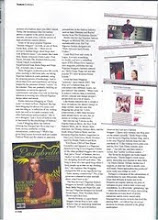
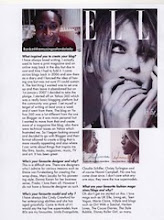


 "He sells a dream," says Anna Wintour. "You want to be that woman in that glorious house, on the glorious beach and in that incredible dress"
"Mario gives them a heightened and more beautiful version of reality," says Tom Ford. "Mario's pictures are very mystic and they're about having a great time. They are about not being afraid of being rich or being famous or being a little bit excessive and are really a celebration of that. A celebration of life."
However, actress Gwyneth Paltrow nails it on the head, "He's very good at doing young, sexy and vibrant pictures."
There is no argument that Mario Testino produces images that are vibrant, sexy and utterly glamorous. Therefore it is no surprise that one of his books is called Alive which when you think about it is totally appropriate because when Mario Testino shoots someone he makes them come alive. In 1997 he took a post divorce suffering and depressed Princess Diana and managed to produce images of her that made her look so radiant and delirious that I am sure Prince Charles must have doubted his decision to let her go. As these images made the rounds in newspapers and magazines, Mario found himself zooming up the A list. Mario was born in Lima, Peru and in 1976, after completing his studies he left Peru to pursue a career in photography and spent his initial years living in a squat in South London. Success was not instant for him and he spent a lot of years struggling to get work - the problem was that instead of finding his own style he was trying to emulate his idols, Cecil Beaton and Richard Avedon. His break came in the 80s when he met a certain Carine Roitfeld (before her French Vogue days) while working on a fashion shoot. Roitfeld was working as a freelance stylist and the two hit it off and began working as a team.
 Over the years he has amassed a remarkable body of work from magazines such as Vogue, Vanity Fair and V to fashion houses such as Burberry, Gucci, Versace, Calvin Klein, Dolce & Gabbana, Salvatore Ferragamo, Estee Launder, Hugo Boss, Miu Miu, Shiseido and Michael Kors. The cream on the cake was in 2002 when his portraits were showcased in the National Portrait Gallery (NPG). Portraits was a landmark exhibition that became the NPG's most successful exhibit and also drew celebrities from afar as well as huge media attention. That year Mario was also the subject of a documentary made by the BBC. I meant to catch that exhibition back in 2002 but never got round to it but I watch the documentary about Mario and I fell in love with his enthusiasm and zest for the life. The man oozes energy and charisma and his passion for life and people are surely key to his ability to make his subjects warm to him during shoots. Mario's success is that he wants his subject to look their best and will go to great lengths to achieve that. This is the man who made the ever so stiff Prince of Wales look cool and relaxed in those chic images in Vanity Fair circa 2001. He has gone on to take the photos of other royals such as the Duchess of Cornwall, Prince William, Prince Harry, The Duke of Kent, Prince and Princess Michael of Kent who normally would have given Lord Snowdon a call. As well as taking images, Mario has published seven books of his work and edited one which is dedicated to contemporary art and artists from his native Lima, Peru.
Here are some more of Mario Testino's images below:


Pictures taken by Mario Testino


